
Disclosure: This page may contain affiliate links. I may earn a commission at no extra cost to you if you purchase through one of these links.
Building a sales funnel traditionally requires research, copywriting, page design, integrations, and testing. An AI funnel builder aims to bring these tasks into one guided workflow, allowing beginners and small online businesses to create automated sales funnels without hiring a full creative team. Although no tool can guarantee conversions, traffic, or revenue, the right platform can reduce setup time and make funnel creation more accessible.
What Is an AI Funnel Builder?
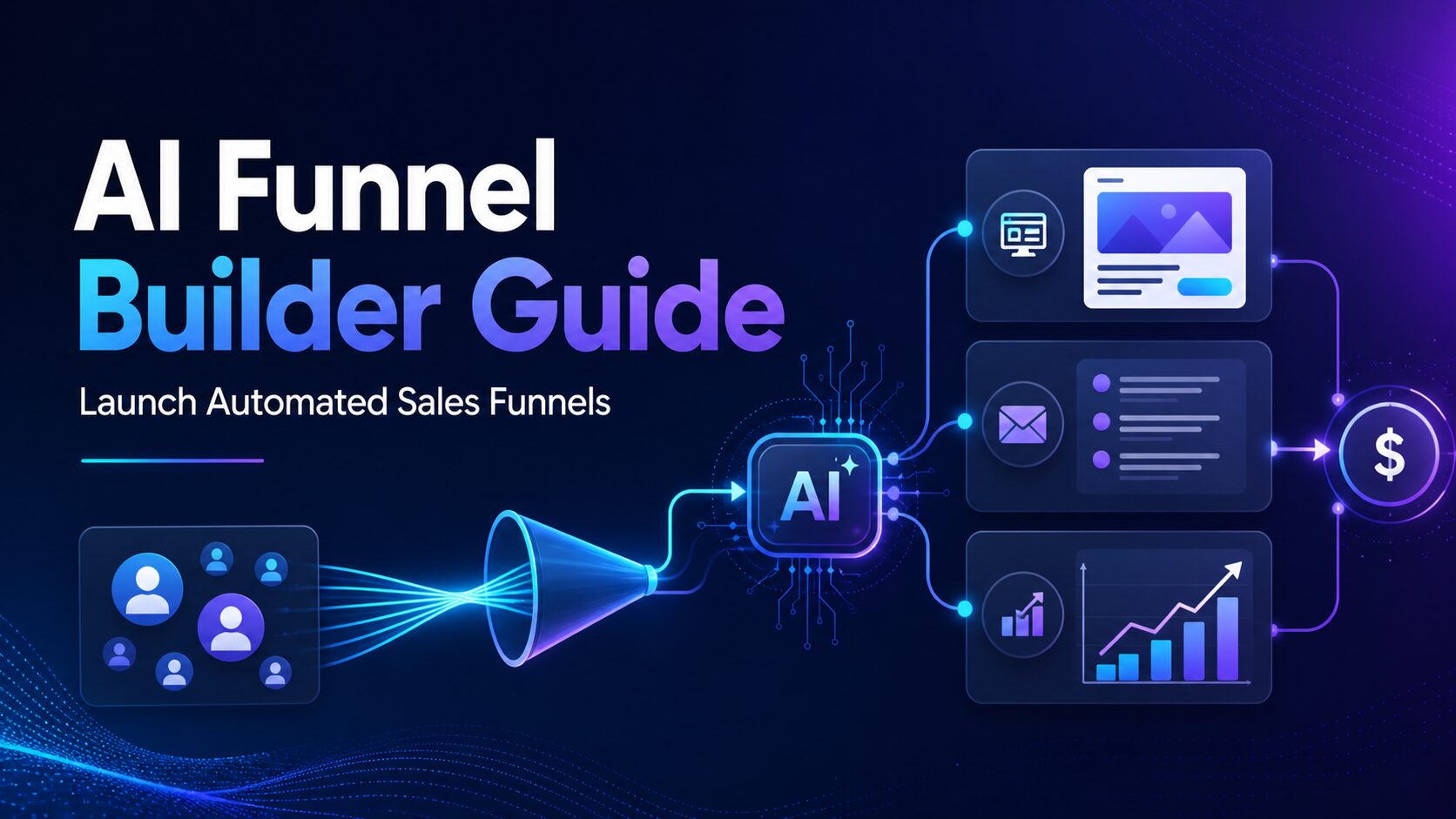
An AI funnel builder is software that uses artificial intelligence to help plan and create the pages, messages, and structure of a marketing funnel. Instead of starting with a blank page, the user may enter a keyword, product description, audience, or business goal.
The software can then suggest a funnel strategy, draft headlines, organize page sections, create calls to action, and generate supporting marketing content. Some platforms also include a visual editor, page hosting, forms, and basic automation.
This approach is sometimes described as keyword-to-funnel AI. The concept is simple: provide a relevant keyword or offer idea, and the tool uses that input to produce a starting point for a complete funnel.
AI-generated output should not be treated as a finished strategy without review. Product details, pricing, claims, testimonials, and brand messaging still need to be checked by a person who understands the business. AI SuperBOT Review: Is This ChatGPT-Like Super AI Chatbot Right for Your Business?
Why Traditional Funnel Creation Can Be Difficult
A conventional funnel project often involves several separate tools and skills. A business owner may need a copywriter for the message, a designer for the page layout, a developer for technical setup, and an email platform for follow-up campaigns.
Managing these moving parts can be expensive and time-consuming, especially when an offer is still being tested. Even no-code software may require users to understand page structure, persuasive writing, mobile design, and conversion tracking.
An AI marketing funnel tool attempts to simplify this process by providing a structured first draft. It does not replace business judgment, but it can remove some of the friction involved in getting an initial funnel online.
How Keyword-to-Funnel AI Works
The exact workflow varies by platform, but most AI-assisted funnel systems follow a similar sequence.
1. Enter a Keyword or Offer Description
The starting input might be a keyword such as “online bookkeeping course,” “local fitness coaching,” or “email templates for freelancers.” A detailed description generally produces more relevant output than a broad one-word topic.
Useful input can include the target customer, the problem being addressed, the desired action, and the main benefit of the offer. Avoid entering unsupported claims or confidential customer information.
2. Select a Funnel Goal
A funnel should have one primary objective. Common goals include collecting leads, booking appointments, registering people for a webinar, selling a digital product, or introducing a service.
The goal influences the page structure and call to action. A lead-generation funnel may need a landing page and thank-you page, while a direct sales funnel may require a sales page, checkout step, and follow-up sequence.
3. Generate the Funnel Structure and Copy
A sales funnel generator can propose page sections such as the headline, problem statement, benefits, offer explanation, frequently asked questions, and call to action. It may also draft emails or short promotional messages.
This content provides a foundation rather than a substitute for editing. Review every section for accuracy, clarity, tone, and compliance. Remove exaggerated language and replace generic statements with specific, supportable information.
4. Customize the Design
An AI landing page builder may create an initial layout or recommend where to place text, images, buttons, forms, and trust elements. With a no-code funnel builder, these sections can usually be adjusted through a visual interface.
Keep the final design simple. Use readable fonts, strong contrast, consistent colors, and enough spacing between elements. Every page should also be reviewed on a mobile device before publication.
5. Connect and Test the Funnel
Before sending visitors to the funnel, test every link, form, button, email, and confirmation message. If payment processing is involved, confirm that checkout details, taxes, delivery instructions, and refund information are correct.
Also check whether tracking and consent notices meet the legal requirements that apply to your business and audience. AI can assist with setup, but the business owner remains responsible for compliance.
What Makes a Funnel More Likely to Convert?
The phrase “high-converting funnels” is widely used in marketing, but conversion performance depends on several factors. These include the quality of the offer, audience relevance, traffic source, pricing, trust, page speed, and follow-up process.
An instant funnel creator can assemble pages quickly, but speed alone does not create a persuasive customer journey. The following principles can improve the quality of an AI-generated funnel without promising a specific outcome.
Use One Clear Promise
Explain what the offer helps the customer do without using hype. A focused promise is easier to understand than a long list of unrelated features. Any performance or financial claim should be truthful and supportable.
Match the Message to the Audience
A funnel for first-time business owners should use different language from one aimed at experienced marketing professionals. Define the reader’s situation, knowledge level, concerns, and desired next step before generating the copy.
Reduce Unnecessary Choices
Each page should direct visitors toward one primary action. Too many menus, buttons, or competing offers can make the next step unclear. Keep secondary links available where necessary, but give the main call to action visual priority.
Build Trust with Accurate Information
Include clear business details, contact information, policies, pricing terms, and realistic explanations of what the customer receives. Only use genuine testimonials or verifiable evidence. AI should never be used to fabricate endorsements, reviews, credentials, or customer results.
Practical Example: Building a Funnel from a Keyword
Consider a small business selling a beginner course on meal planning. The owner could enter the keyword “weekly meal planning course” and describe the audience as busy adults who want a more organized approach to preparing meals.
The chosen goal might be to collect email registrations for a free introductory checklist. The AI funnel builder could propose the following structure:
- A landing page explaining the practical purpose of the checklist.
- A short form requesting a name and email address.
- A thank-you page explaining how to access the resource.
- A welcome email that delivers the checklist.
- A follow-up email introducing the paid course.
The owner would then edit the copy to match the actual course, upload original visuals, connect the email service, and test the registration process. This workflow can be faster than producing every element manually, but human review remains essential.
How to Evaluate Affordable Funnel Software
Affordable funnel software should be judged by its practical value, not simply by the number of advertised AI features. A lower upfront price may be attractive, but check whether essential functions require upgrades or separate subscriptions.
Before choosing a platform, review the following areas:
- Ease of use: Can a beginner edit generated pages without coding?
- Customization: Can you change copy, colors, layouts, forms, and calls to action?
- Publishing options: Does it support a custom domain or an appropriate hosted URL?
- Integrations: Can it connect with the email, payment, analytics, and customer tools you use?
- Mobile responsiveness: Are pages easy to read and use on smaller screens?
- Data ownership: Can you export leads or move your content if your needs change?
- Support and documentation: Are setup instructions and support channels clearly available?
- Pricing terms: Are recurring fees, usage limits, upgrades, and refund terms clearly explained?
If a product is presented as revolutionary or as the world’s first AI funnel builder, treat that language as a marketing claim rather than a deciding factor. Focus on demonstrated features, current terms, usability, and suitability for your business.
A Simple AI Funnel Launch Checklist
- Choose one offer and define one primary conversion goal.
- Write a clear description of the target customer and their problem.
- Enter a focused keyword and detailed offer information into the tool.
- Generate the funnel structure, landing page, and follow-up content.
- Fact-check and rewrite the AI-generated copy in your brand voice.
- Add accurate product details, policies, contact information, and disclosures.
- Customize the design for readability and mobile use.
- Connect forms, email tools, analytics, and payment systems as needed.
- Test the entire customer journey on desktop and mobile devices.
- Publish the funnel and monitor relevant performance data.
- Improve one element at a time based on actual visitor behavior.
Limitations of Automated Sales Funnels
AI can generate content that sounds confident even when the underlying details are incomplete. It may also produce repetitive wording, generic benefits, or claims that do not accurately describe an offer.
Automated sales funnels still require strategic decisions. The software cannot independently verify product quality, understand every customer concern, or determine whether an offer has genuine market demand.
Privacy, advertising, accessibility, and consumer protection requirements also vary by location and industry. Businesses in regulated fields should seek appropriate professional guidance rather than relying on generated copy.
Conclusion: Is an AI Funnel Builder Worth Considering?
An AI funnel builder can be useful for beginners, solo operators, and small businesses that want to create a functional marketing funnel without immediately hiring a copywriter, designer, and developer. Its strongest value is speed to a workable first draft, not guaranteed business performance.
The best results are more likely to come from combining AI assistance with a relevant offer, accurate messaging, careful editing, reliable technical setup, and ongoing testing. Think of the software as a production assistant rather than an automatic replacement for strategy.
If you want to explore a keyword-to-funnel AI platform, you can review the current AI funnel builder offer here. Check the latest feature list, pricing, limitations, and refund terms before purchasing to confirm that it fits your needs.
Affiliate disclosure: This article contains an affiliate link. If you make a purchase through it, the publisher may receive a commission at no additional cost to you.
Frequently Asked Questions
Can an AI funnel builder create an entire sales funnel from a keyword?
Some tools can use a keyword and offer description to generate a funnel outline, landing page copy, page sections, and follow-up content. The output should still be reviewed, customized, fact-checked, and tested before publication.
Do I need coding skills to use a no-code funnel builder?
Most no-code funnel builders are designed for visual editing, so coding is not normally required for standard pages. Technical knowledge may still help when connecting domains, analytics, email services, payment tools, or custom integrations.
Can AI replace a professional copywriter or designer?
AI can reduce the amount of work needed for an initial draft, but it does not fully replace professional judgment. Experienced specialists may still be valuable for brand strategy, complex offers, original creative direction, compliance, and conversion optimization.
Does an AI funnel builder guarantee high conversions?
No. Conversion rates depend on the offer, audience, traffic quality, message, design, pricing, trust, and follow-up. An AI tool can help create and test funnel assets, but it cannot guarantee traffic, leads, sales, or income.
What should beginners look for in funnel software?
Beginners should prioritize ease of use, editable templates, mobile responsiveness, clear pricing, useful integrations, reliable support, data export options, and the ability to test pages before publishing.