
Disclosure: This page may contain affiliate links. I may earn a commission at no extra cost to you if you purchase through one of these links.
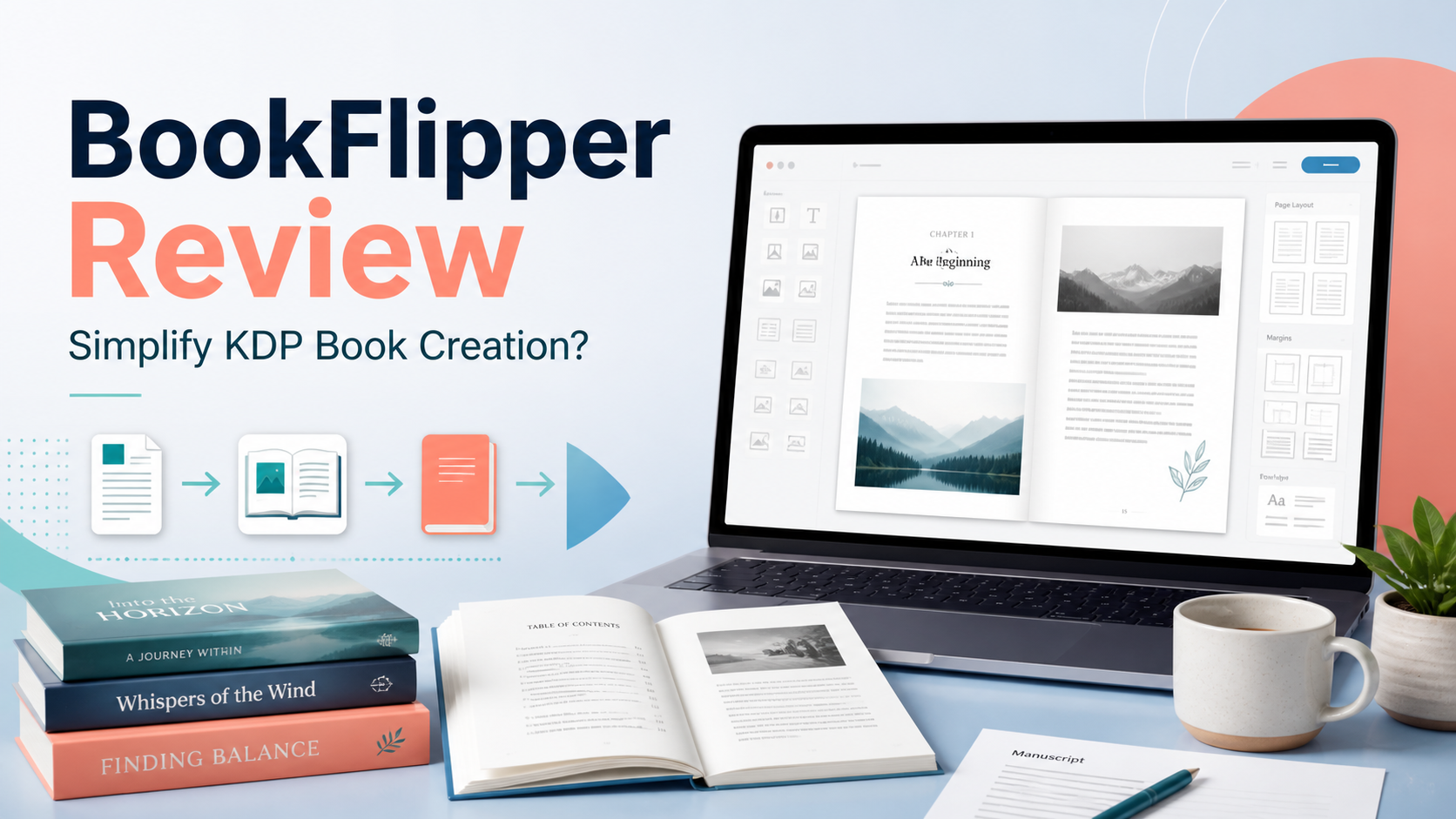
Creating books for Amazon Kindle Direct Publishing can involve several time-consuming steps, including niche research, writing, editing, cover design, formatting, and listing preparation. BookFlipper is promoted as a tool that brings these tasks into one workflow. This review looks beyond the promotional headline to help beginners understand what the platform is intended to do, where automation may be useful, and why human review remains essential.
Affiliate disclosure: This article contains an affiliate link. If you purchase through it, the publisher of this article may earn a commission at no additional cost to you. This does not affect the practical considerations or cautions discussed below.
What Is BookFlipper?
BookFlipper is marketed as an AI-assisted book creation and publishing platform for Amazon KDP users. Its sales messaging describes it as the “World’s #1 Book Empire Builder That Finds Profitable Niches & Topics, Writes The Books,” and continues with the claim that it “Designs The Cover & Publishes Them To Amazon KDP…All In Under 10 Minutes.”
These are promotional claims rather than guarantees. The time required to produce a responsible, publishable book will depend on the subject, length, research requirements, editing process, cover quality, and Amazon’s review procedures. Software may generate a draft quickly, but speed should not replace fact-checking, originality checks, proofreading, or policy compliance.
In practical terms, BookFlipper appears designed to reduce the number of separate tools needed during the early stages of book production. Instead of researching a topic in one application, drafting in another, and designing a cover elsewhere, a user may be able to manage more of the workflow from one dashboard.
Who Might Consider BookFlipper?
BookFlipper may appeal to beginners who want guidance through the basic KDP workflow. It could also interest small online business owners who want to turn existing knowledge into short educational books, customer guides, workbooks, or related publishing assets.
Potential users include:
- New KDP publishers who are unsure how to organize the creation process
- Bloggers interested in adapting original expertise into a book
- Small business owners creating helpful guides for their audiences
- Creators who want assistance brainstorming topics and outlines
- Existing publishers looking to streamline repetitive production tasks
It is less suitable for anyone expecting automatic income or completely hands-off publishing. Amazon KDP is a competitive marketplace, and no tool can guarantee sales, rankings, reviews, or reader satisfaction.
How the BookFlipper Workflow Is Intended to Help
1. Finding Niches and Topics
Choosing a topic is often the first obstacle for a new publisher. A useful research tool can help generate ideas, organize market observations, and identify questions that readers may be asking.
However, a suggested niche is not automatically profitable. Before committing to an idea, examine relevant Amazon search results, competing titles, reader reviews, book quality, pricing, and the depth of your own knowledge. Look for a clear reader problem rather than relying only on a broad keyword.
For example, “small business marketing” is extremely broad. A more focused idea might be “a beginner’s weekly email planning workbook for local service businesses.” The narrower concept identifies a reader, a task, and a practical outcome without promising financial results.
2. Generating a Book Draft
AI-assisted writing can make it easier to move from a blank page to an outline or first draft. BookFlipper’s writing component is presented as a way to generate book content based on the chosen topic.
Treat generated text as raw material, not a finished manuscript. Check every chapter for repetition, unsupported claims, factual errors, vague advice, and inconsistent tone. Add your own explanations, examples, frameworks, and subject knowledge where appropriate. If you lack expertise in a topic, consult reliable primary or authoritative references before publishing advice about it.
Extra caution is necessary for health, legal, financial, safety, or other high-impact subjects. A quickly generated book in one of these areas could mislead readers if it is not reviewed by someone with suitable expertise.
3. Creating a Cover
A built-in cover feature may simplify a step that often requires design software or an outside freelancer. Even so, a generated cover should be checked at both full size and thumbnail size.
Make sure the title remains readable, the visual style fits the genre, and the design does not imitate another publisher’s branding. Confirm that every image, font, and graphic element can legally be used in a commercial book. You should also verify that the final dimensions match the current KDP requirements for the selected format and page count.
4. Preparing the Book for Amazon KDP
Publishing support can reduce repetitive setup work, but the account owner remains responsible for the listing and uploaded files. Review the manuscript preview, margins, page breaks, table of contents, author name, title, subtitle, description, categories, keywords, and pricing before submission.
Amazon’s requirements can change. Read the latest KDP content and publishing guidelines directly inside Amazon’s official help resources, including any current requirements concerning AI-generated or AI-assisted content. Do not assume that a tool’s output is automatically compliant.
Potential Benefits of Using BookFlipper
The main potential advantage is convenience. A centralized workflow can make a complicated process feel more manageable, especially for someone publishing a first book.
- Fewer disconnected steps: Research, drafting, cover creation, and listing preparation may be available in one place.
- Faster first drafts: Automation may shorten the time needed to create an outline and initial manuscript.
- Beginner structure: A guided process can help users understand what needs to be completed.
- Idea development: Topic suggestions may help creators move beyond a blank page.
- Repeatable workflow: Templates and organized steps can support a more consistent production process.
These benefits concern efficiency, not guaranteed results. A fast workflow is only valuable when the finished book is accurate, original, readable, and useful.
Important Limitations and Risks
Generated Content Can Be Wrong
AI-generated writing can present incorrect information confidently. It may also repeat points, invent details, or provide generic advice. Every statement that could affect a reader’s decisions should be verified.
Output May Need Substantial Editing
Readers generally expect a coherent book with a clear purpose. Automated drafts can sound repetitive or disconnected, especially across longer chapters. Developmental editing, line editing, and proofreading may still be necessary.
Topic Suggestions Do Not Prove Demand
A software-generated recommendation cannot guarantee that people will buy a book. Demand, competition, positioning, cover quality, reader trust, pricing, and promotion can all influence performance.
Copyright and Originality Still Matter
Do not publish copied, lightly reworded, or derivative material. Check names, examples, quotations, images, and other assets for possible rights issues. Avoid using protected brands or recognizable characters in ways that could imply permission or affiliation.
Publishing Is Not the Same as Selling
Uploading a book to Amazon makes it available for review and possible sale; it does not guarantee visibility. A creator may still need an ethical marketing plan, such as serving an existing audience, building an email list, sharing useful content, or developing a related series.
A Practical BookFlipper Publishing Process
- Choose a reader before choosing a topic. Define who the book will help and what question it will answer.
- Validate the concept manually. Review comparable books, search language, customer feedback, and gaps in existing content.
- Create a focused outline. Give each chapter one clear purpose and arrange the chapters in a logical order.
- Generate a draft in sections. Smaller sections are often easier to review than one large manuscript.
- Verify factual claims. Use dependable sources and remove anything you cannot confirm.
- Add original value. Include your own frameworks, checklists, exercises, or properly supported examples.
- Edit for the reader. Remove repetition, simplify difficult language, and improve transitions.
- Review the cover and formatting. Check readability, usage rights, dimensions, margins, and device previews.
- Inspect the KDP listing. Make sure the description is accurate and does not contain exaggerated promises.
- Read the current KDP policies. Complete any required disclosures and retain your source files and research notes.
- Order or preview the final version. Correct formatting or quality problems before actively promoting it.
Example of a Responsible Book Project
Imagine a freelance web designer who regularly teaches clients how to prepare website content. Instead of creating a generic book about online success, the designer could develop a practical workbook titled around preparing copy for a five-page service-business website.
BookFlipper could potentially help brainstorm chapter topics, create an initial outline, produce draft explanations, and explore cover concepts. The designer would then add an original content checklist, page-planning worksheets, anonymized examples, and lessons based on genuine professional knowledge.
This approach uses automation for organization and drafting while keeping human expertise at the center. It also gives the book a defined audience and purpose. It does not assume that the book will rank or sell a particular number of copies.
Questions to Ask Before Buying
Because software features, pricing, usage limits, and refund terms may change, review the current sales page and terms before purchasing. Useful questions include:
- Is the payment one-time or recurring?
- Are there limits on books, words, exports, or generated images?
- Which file formats can be exported?
- Can drafts be edited outside the platform?
- What commercial-use rights apply to generated content and covers?
- Does publishing require you to share KDP account access?
- What support and training are included?
- What is the current refund policy?
Save a copy of the terms available when you buy. Never share sensitive credentials unless you understand why access is requested and how the provider protects account information.
Conclusion: Is BookFlipper Worth Exploring?
BookFlipper may be useful for beginners who want a guided way to research ideas, develop drafts, create covers, and prepare books for Amazon KDP. Its greatest potential benefit is workflow efficiency rather than guaranteed commercial success.
The platform should not replace research, editing, fact-checking, originality, or knowledge of Amazon’s policies. A responsible user will slow down when necessary and publish only after the book provides genuine value to its intended reader.
If that approach matches your goals, you can visit the official BookFlipper offer page to review the latest demonstration, features, pricing, usage limits, and terms. Compare those details with your budget and publishing needs before making a decision.
Frequently Asked Questions
What is BookFlipper?
BookFlipper is promoted as an AI-assisted platform for finding book ideas, generating drafts, creating covers, and supporting the Amazon KDP publishing workflow. Buyers should confirm the current feature set on the official offer page.
Can BookFlipper guarantee profitable book niches?
No tool can guarantee that a niche or book will be profitable. Topic suggestions should be validated through manual research, competitive analysis, and a clear understanding of the target reader.
Can a complete KDP book really be published in under 10 minutes?
The vendor promotes a rapid creation process, but responsible publishing may take longer. Editing, fact-checking, formatting checks, policy review, and Amazon’s own review process require additional time.
Do BookFlipper drafts still need editing?
Yes. AI-assisted drafts should be reviewed for accuracy, originality, repetition, clarity, tone, and usefulness. Specialized subjects may also require review by a qualified expert.
Does using BookFlipper guarantee Amazon sales?
No. Book quality, positioning, competition, pricing, reader demand, reviews, and marketing can all affect sales. BookFlipper or any similar tool cannot guarantee traffic, rankings, income, or other results.
Is BookFlipper suitable for complete beginners?
Its guided workflow may make the process easier to understand, but beginners still need to learn KDP policies, copyright basics, editing standards, and ethical marketing practices.