
This post is about my own story and mentions my own book, The Mortgage Playbook. This is my own book, written and sold by me. When you buy through a link on this page, you are buying directly from the author.
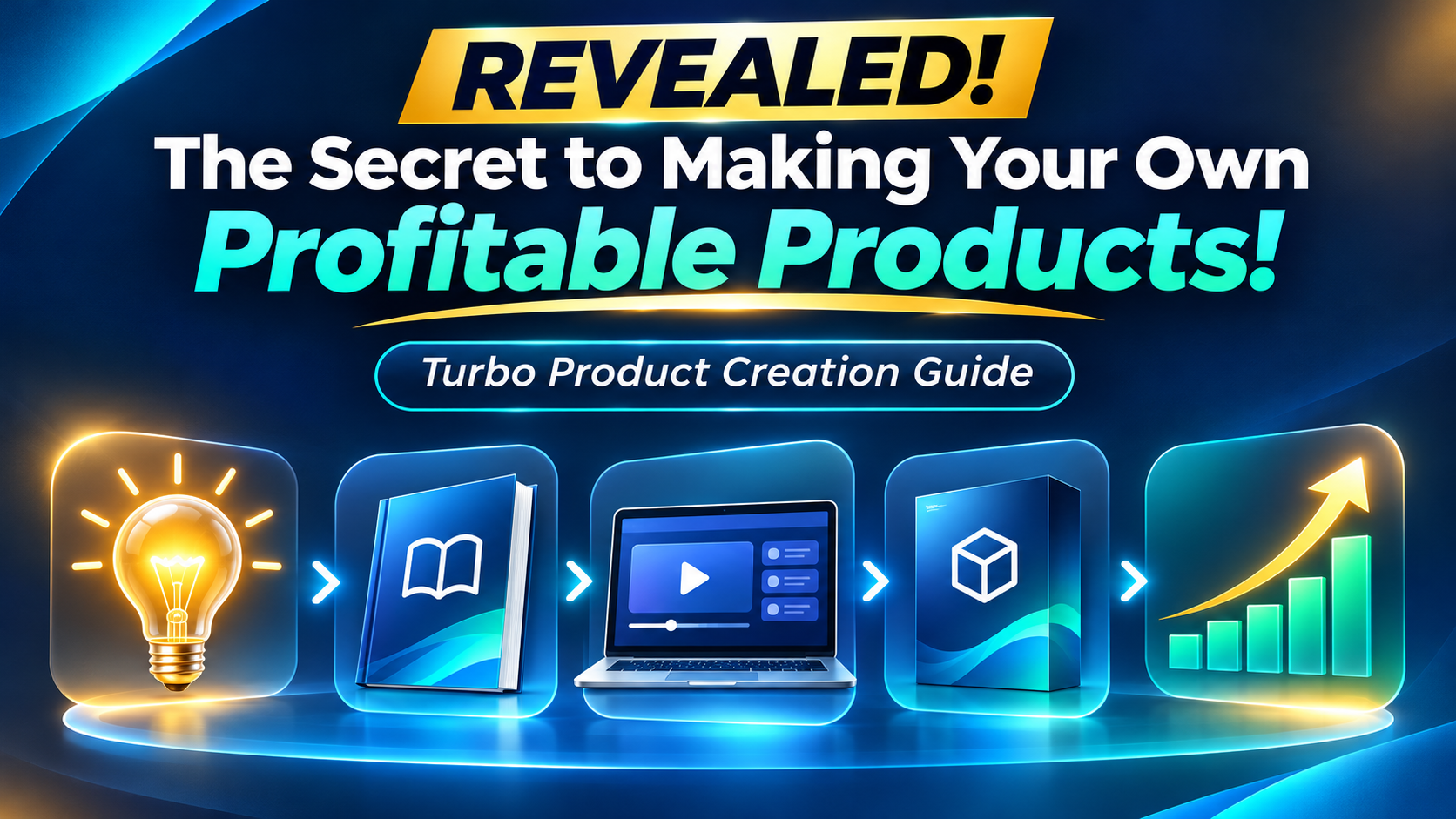
REVEALED! The Secret to Making Your Own Profitable Products! is an attention-grabbing promise, but the real “secret” is not a hidden shortcut. Profitable products usually begin with a specific customer problem, a practical solution, and a clear plan for testing demand before investing too much time or money.
More people now use the internet to research problems, compare solutions, and purchase information. This creates opportunities for entrepreneurs to sell ebooks, templates, video training, checklists, memberships, and other digital resources. It also means customers have many choices and are unlikely to be satisfied with a rushed or generic product.
This guide explores a practical product-development process and takes a balanced look at Turbo Product Creation. It is intended for beginners and small online business owners who want a more organized way to turn useful knowledge into a product.
Affiliate disclosure: This article contains an affiliate link. If you purchase through it, the publisher may earn a commission at no additional cost to you. This does not affect the price you pay or the need to evaluate the offer for yourself.
Why Some Information Products Struggle
It is possible to create a digital product quickly. However, speed alone does not make that product valuable or profitable. A creator can spend a week recording videos or writing an ebook, only to discover that customers do not understand the material, cannot apply it, or expected something different.
Common reasons information products struggle include:
- Choosing a topic without confirming that people want help with it
- Trying to solve too many problems in one product
- Providing broad information instead of actionable guidance
- Using marketing claims that the product cannot reasonably support
- Failing to explain who the product is for and who it is not for
- Publishing without editing, testing, or gathering feedback
- Ignoring customer support and refund concerns
A disappointed customer is not always proof that the information is wrong. Sometimes the problem is a mismatch between the sales message and the product. If a beginner buys an advanced course, or a sales page implies unusually fast results, dissatisfaction becomes more likely. Grab the 17-Step Plan to Build a REAL Sales Funnel: A Beginner-Friendly Guide
What Makes a Digital Product Potentially Profitable?
No course, blueprint, or marketing system can guarantee profit. Results depend on factors such as audience fit, product quality, pricing, promotion, costs, competition, and execution. Nevertheless, several principles can improve the likelihood of creating something people find worth buying.
A Clearly Defined Customer
“Online business owners” is a broad audience. “Freelance designers who need a simple client onboarding system” is more specific. A defined customer makes it easier to choose the right examples, format, price, and marketing message.
Write a one-sentence audience statement before creating anything:
This product is for [type of person] who wants to [desired improvement] but is struggling with [specific obstacle].
One Important Problem
A focused product is often easier to create and understand than a large course covering every aspect of a subject. For example, instead of making a general course about email marketing, you could create a template pack that helps local service businesses write their first five follow-up emails.
The goal is not to make the product feel small. It is to make the outcome clear and manageable.
A Practical Path to an Outcome
Customers can find general information through search engines, videos, and social media. A paid product should add value through organization, clarity, examples, tools, or a step-by-step process.
A useful product might include:
- A logical sequence of lessons
- Short action steps after each lesson
- Templates or worksheets that reduce setup time
- Examples showing how to apply the ideas
- Troubleshooting advice for common mistakes
- A checklist that helps customers track progress
A Step-by-Step Product Creation Process
Step 1: Collect Evidence of a Real Problem
Begin with research rather than assumptions. Read public discussions in relevant communities, review comments on educational videos, examine product reviews, and note the questions customers repeatedly ask. If you already have an audience, you can use a short survey or conduct informal conversations.
Look for patterns. One comment may represent an individual preference, while a question repeated by many people may indicate a broader need.
Do not copy another creator’s product or wording. Use research to understand customer language and unmet needs, then develop your own original approach.
Step 2: Validate the Idea Before Building Everything
Validation means looking for credible signs that the intended audience cares about the solution. It does not guarantee sales, but it can prevent you from committing weeks to an idea nobody has requested.
You could validate an idea by offering a free workshop, publishing an article on the topic, creating a waitlist, or showing a detailed product outline to several potential customers. A small paid pilot can also be useful if buyers receive a clear explanation of what is included and when it will be delivered.
Ask questions such as:
- Is the problem urgent enough for people to address now?
- Are people already paying for related tools or training?
- What have they tried, and why did it fall short?
- Which format would be easiest for them to use?
- What questions would stop them from buying?
Step 3: Define the Product Promise Carefully
A strong promise should describe what the product helps customers do without guaranteeing a result you cannot control. For example, “Use a step-by-step worksheet to plan your first lead magnet” is more responsible than “Build a lead magnet that will generate thousands of subscribers.”
Customer results vary because customers have different skills, audiences, budgets, and levels of follow-through. Keep the promise specific, useful, and supportable.
Step 4: Choose the Simplest Suitable Format
Not every idea needs a large video course. A checklist may be appropriate for a short process, while a workbook may suit planning exercises. Video can help when customers need demonstrations. Templates work well when the main value is reducing repetitive work.
Choose the format based on the problem rather than what appears most impressive. A concise resource that customers finish can be more valuable than a long course they never complete.
Step 5: Create a Minimum Useful Version
A minimum useful product includes everything required to address the core problem, but avoids unnecessary extras. Outline the customer journey from starting point to intended outcome. Each module or section should help the customer take the next step.
For example, a beginner’s product-planning kit might include:
- A customer profile worksheet
- A problem-research checklist
- An idea validation scorecard
- A product outline template
- A basic launch calendar
- A post-launch feedback form
You can expand the product after receiving useful customer feedback. This is usually more efficient than creating numerous bonuses before confirming that the central solution works well.
Step 6: Review Quality and Usability
Before launch, check the product from a beginner’s perspective. Remove jargon, explain unfamiliar terms, test every link, and confirm that downloadable files open correctly. Make sure videos have understandable audio and that worksheets include instructions.
Ask a small number of appropriate testers to work through the material. Instead of asking only whether they liked it, ask where they became confused, what they expected to see, and which steps were difficult to complete.
Step 7: Build an Honest Sales Page
Your sales page should explain the audience, problem, product contents, format, price, access details, and refund terms. Screenshots or previews can help buyers understand what they will receive.
Avoid implying that every customer will earn the same income as an experienced marketer. If a program is promoted using phrases such as “7-figure product launches,” remember that another person’s revenue history does not predict a beginner’s results. Revenue is also different from profit because it does not account for advertising, software, contractors, refunds, taxes, and other expenses.
Where Turbo Product Creation May Fit
Turbo Product Creation is presented as training designed to help marketers create products more efficiently, with how-to video instruction included in the offer. A structured blueprint may appeal to someone who has useful knowledge but needs help organizing it into a sellable digital resource.
Training can provide a framework, but it cannot replace customer research, original thinking, quality control, or consistent implementation. Before buying, review the current sales page and confirm exactly what is included, who provides the training, the level of experience required, any additional tools or costs, access terms, support options, and the refund policy.
This type of program may be worth considering if you:
- Already have a product topic or audience in mind
- Prefer video-based, step-by-step instruction
- Need a framework to organize your creation process
- Have time to implement the lessons and gather feedback
It may be less suitable if you expect automated income, guaranteed sales, or a substitute for audience research. You should also avoid buying a new course if you already have similar training that you have not yet used.
A Simple Example
Imagine a virtual assistant notices that new freelancers repeatedly ask how to onboard their first clients. Instead of creating a broad “freelancing mastery” course, the assistant researches the most common onboarding problems.
The resulting product could be a focused client onboarding toolkit containing an intake questionnaire, welcome email templates, a kickoff call agenda, and a checklist. The creator could test the concept with a short workshop, ask participants which documents they need, and revise the toolkit before a wider launch.
This process does not guarantee profit. However, it connects the product to an observed problem, keeps production manageable, and provides opportunities to improve the material before spending heavily on promotion.
Conclusion
The real secret to making your own potentially profitable products is a repeatable process: understand a specific audience, validate an important problem, create a focused solution, test its usability, and market it with accurate expectations. Fast creation can be useful, but only when speed does not come at the expense of relevance or quality.
If you want guided video training and a structured product-development blueprint, you can review the Turbo Product Creation offer here. Read the current terms and product details carefully, compare them with your needs and budget, and make your own informed decision.
Frequently Asked Questions
What is Turbo Product Creation?
Turbo Product Creation is presented as a training resource for developing digital products more efficiently. The current offer should explain the included videos, materials, access conditions, support, price, and refund terms. Review those details directly because online offers can change.
Does Turbo Product Creation guarantee a profitable product?
No training can guarantee that a product will be profitable. Profit depends on demand, product quality, positioning, pricing, promotion, expenses, customer satisfaction, and implementation. Training may provide a process, but the creator remains responsible for research and execution.
What is the best first digital product for a beginner?
A focused product that solves one clear problem is often a manageable starting point. Depending on the audience, this could be a template pack, checklist, workbook, short ebook, workshop, or compact video course. The best format is the one that helps customers apply the solution easily.
How can I validate a product idea?
Research recurring questions, speak with potential customers, publish content about the problem, create a waitlist, or run a small workshop or paid pilot. Validation is stronger when people take a meaningful action rather than simply saying an idea sounds interesting.
How quickly should I create a digital product?
The timeline depends on the product’s complexity and your available resources. Work efficiently, but allow enough time for research, editing, testing, and revisions. A smaller high-quality product is generally preferable to a large, rushed one.

How I rebuilt my credit and bought my home — the exact steps, in plain English.
GET IT — $27

Enjoy reviews like this? Tell Google to show you FreebieBro first.
★ Add FreebieBro as a Preferred Source on Google Online BusinessDomainRack Review: Can This “GoDaddy Killer” Software Help You Start a Domain Selling Business?Read the review →
 Affiliate Marketing10K INSIDER CLUB Freedom & Coaching System Review: A Practical Guide for BeginnersRead the review →
 AI Software ReviewsAI Mogul Review: A Practical Guide for Beginners and Small Business OwnersRead the review →