Disclosure: This page may contain affiliate links. I may earn a commission at no extra cost to you if you purchase through one of these links.
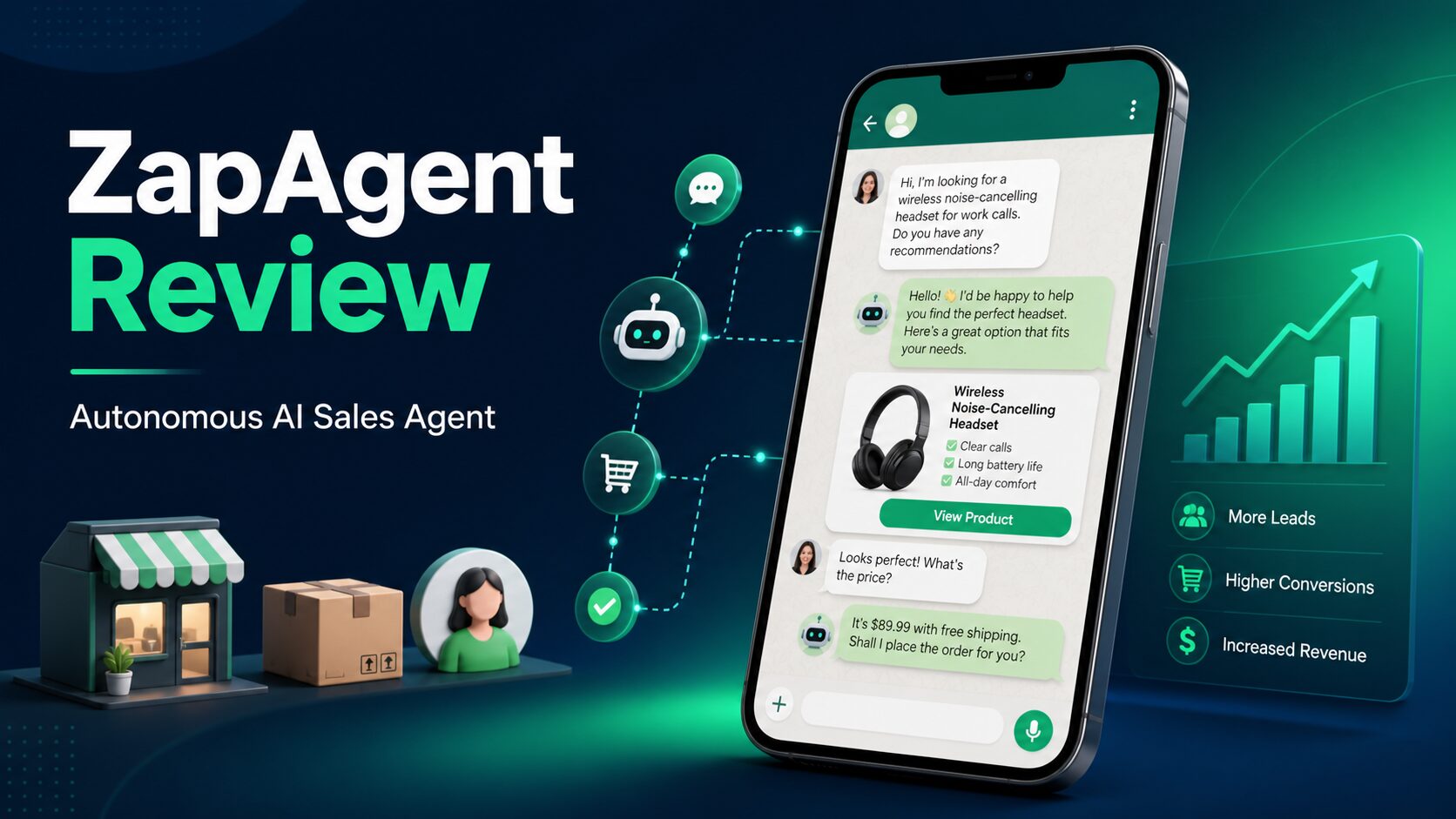
Following up with prospects can consume a large part of a small business owner’s day. ZapAgent is presented as the world’s first FULLY AUTONOMOUS WHATSAPP AI SALES AGENT, designed to find leads, conduct conversations, follow up, and support sales without constant human intervention. This review explains the concept, potential use cases, practical setup steps, and important limitations so you can decide whether it fits your business. This article contains an affiliate link, which means we may earn a commission if you purchase through it, at no additional cost to you.
What Is ZapAgent?
ZapAgent is a WhatsApp-focused sales automation tool. According to its product positioning, it can act as an AI sales agent that identifies potential leads, communicates with prospects, follows up, and guides conversations toward a purchase or another desired action.
The central idea is to replace repetitive manual messaging with an automated workflow. Instead of personally answering every common question or remembering when to contact each prospect, a business owner can configure an AI agent to handle appropriate parts of the process.
ZapAgent is also promoted as being usable even if you do not already have a product, website, or email list. This may appeal to beginners exploring affiliate marketing or service-based offers. However, you will still need a legitimate offer, a defined audience, an ethical lead-generation method, and a clear reason for people to engage with your messages. AutoChannel AI Review: Is This Autonomous OpenClaw AI Agent Right for You?
What Does Fully Autonomous Mean?
In this context, autonomous generally means that the software is intended to perform multiple sales activities with limited day-to-day input. These activities may include starting conversations, responding to routine questions, sending follow-up messages, and directing interested prospects to an offer.
That does not mean a business should activate an AI agent and ignore it indefinitely. Initial configuration, message review, policy compliance, performance monitoring, and occasional human intervention remain important. Complex questions, complaints, refund requests, or sensitive customer situations are often better handled by a person.
The phrase without human intervention should therefore be understood as the product’s automation goal rather than a guarantee that human oversight will never be required.
How ZapAgent Could Fit Into a Sales Process
Lead discovery and initial contact
ZapAgent is marketed as being able to find leads and begin sales conversations. Before using any lead-generation feature, confirm where the contact information comes from and whether recipients have agreed to receive messages.
Sending unsolicited WhatsApp messages can damage trust and may conflict with platform rules or applicable privacy and marketing laws. A safer approach is to invite people to start a conversation through an advertisement, QR code, landing page, social profile, or voluntary opt-in form.
Automated qualification
An AI agent can ask simple questions to determine what a prospect needs. For example, a marketing consultant might ask about the prospect’s type of business, current lead-generation method, budget range, and preferred timeline.
The answers can help separate casual inquiries from people who are ready for a product demonstration, consultation, or purchase. This can reduce the amount of time spent on poor-fit conversations.
Product and service explanations
Prospects frequently ask the same questions about pricing, features, delivery, support, and suitability. A configured AI agent can provide consistent responses based on the information supplied by the business owner.
Accuracy matters. Do not give the agent vague or exaggerated claims. Provide current product details, approved answers, refund terms, and clear boundaries around what the offer can and cannot do.
Follow-up conversations
Many prospects do not make a decision during their first interaction. They may be busy, need more information, or want to compare alternatives. Automated follow-up can help keep the conversation active without requiring the owner to remember every contact manually.
Effective follow-ups should be helpful rather than aggressive. A message can answer a common objection, provide a relevant example, or ask whether the prospect still wants assistance. Recipients should also have a simple way to stop future messages.
Guiding prospects toward an action
Depending on the campaign, the desired action could be visiting a sales page, purchasing a product, booking an appointment, requesting a quote, or speaking with a human representative. The agent should make this next step clear without pressuring the prospect.
Who Might Consider ZapAgent?
ZapAgent may be relevant to affiliate marketers, freelancers, consultants, agencies, coaches, local businesses, and digital product sellers that already use WhatsApp to communicate with prospects.
It could be particularly useful for a small operation where one person handles marketing, sales, and customer support. Automating repetitive conversations may create more time for offer development, customer delivery, and high-value sales discussions.
Beginners without their own product may be able to use the system to promote third-party offers as affiliates, provided the relevant affiliate program allows the marketing method. Affiliate relationships should be disclosed clearly, and promotional messages must remain truthful.
Practical Steps for Setting Up a WhatsApp AI Sales Agent
1. Choose one specific offer
Start with a single product or service rather than asking the agent to sell several unrelated offers. Write down the target customer, main problem, key benefits, price, purchase process, and important limitations.
A focused offer makes it easier to create useful responses and evaluate whether the automated conversations are working as intended.
2. Define the conversation goal
Decide what the agent should achieve. It might qualify a prospect, answer preliminary questions, recommend a suitable plan, send a checkout link, or schedule a call.
Use one primary goal for the first campaign. Too many possible paths can make the conversation confusing for both the agent and the prospect.
3. Build a reliable knowledge base
Collect the information the AI needs, including product descriptions, pricing, frequently asked questions, eligibility requirements, guarantees actually provided by the seller, support details, and refund policies.
Review this material for accuracy. An AI system should not invent features, discounts, testimonials, or expected results when information is missing.
4. Write a transparent opening message
Tell recipients who is contacting them and why. If the conversation is automated, consider disclosing that they are interacting with an AI assistant. Transparency helps prospects make an informed choice about continuing.
A simple opening could be: Hello, you requested information about our appointment-booking service. I am an automated assistant and can answer common questions or help you arrange a call. What would you like to know?
5. Create qualification questions
Use a small number of relevant questions. Avoid collecting sensitive personal information unless it is genuinely necessary and handled securely.
For a website design service, the agent might ask whether the prospect already has a website, what kind of business they operate, which pages they need, and when they hope to launch.
6. Set follow-up limits
Plan when follow-ups should be sent and when they should stop. Repeated messaging can quickly become intrusive. Give prospects an obvious opt-out option and respect it immediately.
It is also sensible to pause automation when a prospect asks to speak with a person, raises a complaint, or presents a question the agent cannot answer confidently.
7. Test before launching
Run realistic test conversations using common questions, objections, misspellings, unclear requests, and negative responses. Check every link and confirm that pricing and policy information are correct.
Testing can reveal awkward messages, unsupported claims, or conversation loops before real prospects encounter them.
8. Review conversations regularly
Even a highly automated tool needs oversight. Review samples of conversations to identify unanswered questions, inaccurate statements, excessive follow-ups, and points where prospects lose interest.
Use these observations to refine the knowledge base and message flow. Automation is usually more effective when treated as an evolving system rather than a one-time setup.
Example Use Cases
Affiliate marketing
An affiliate marketer could invite interested social media followers to request a buyer’s guide through WhatsApp. The AI agent could ask what problem the person wants to solve, explain relevant product differences, disclose the affiliate relationship, and provide a tracked link when appropriate.
The agent should not claim that a product guarantees income, traffic, or business success. Recommendations should be based on the prospect’s stated needs.
Local service business
A cleaning company could use an automated agent to ask about property type, approximate size, location, preferred date, and requested service. Qualified inquiries could then be directed to a booking page or human team member for a final quote.
Consulting or coaching
A consultant could let the agent answer basic questions about the program, explain who it is designed for, and offer available consultation times. Complex discussions about strategy or suitability could be escalated to the consultant.
Potential Advantages
- Faster responses: Prospects may receive answers without waiting for the owner to become available.
- Consistent messaging: The agent can use approved information across conversations.
- Reduced repetitive work: Common questions and routine follow-ups can be automated.
- Extended availability: Automated conversations can continue outside normal working hours.
- Scalable qualification: The system may handle multiple initial conversations before human involvement is needed.
These are potential operational benefits, not guaranteed outcomes. Results depend on the quality of the offer, lead source, setup, messaging, audience fit, and ongoing management.
Limitations and Points to Check
Before purchasing, confirm the current feature list, pricing, usage limits, integration requirements, support options, refund terms, and any additional WhatsApp-related costs. Product features and commercial terms can change.
You should also verify how ZapAgent obtains or manages leads, how data is stored, and which controls are available for consent and opt-outs. Businesses operating in regulated industries may have additional obligations.
AI can misunderstand context or provide an unsuitable response. A clear human escalation process is important, especially for complaints, high-value purchases, sensitive topics, and unusual requests.
Finally, automation cannot compensate for a weak or misleading offer. Prospects still need a credible product, clear value, fair pricing, and trustworthy communication.
Is ZapAgent Worth Considering?
ZapAgent may be worth exploring if WhatsApp is already relevant to your audience and repetitive sales conversations are taking up too much time. Its appeal lies in combining lead engagement, qualification, follow-up, and sales guidance within one automated process.
It is less suitable for businesses that rely on highly personal consultations, cannot obtain proper messaging consent, or are unwilling to monitor automated conversations. The best approach is to evaluate the official product details against a specific sales workflow rather than buying solely because of the autonomous AI label.
Conclusion
ZapAgent is positioned as a fully autonomous WhatsApp AI sales agent that can find leads, follow up, and help move prospects toward a sale, including for users who do not yet have a product, website, or list. That positioning is attractive to beginners and lean businesses, but responsible setup and human oversight still matter.
Define a legitimate offer, use permission-based messaging, supply accurate information, test the conversation flow, and monitor how the agent interacts with real prospects. These steps can help you use automation without sacrificing transparency or customer trust.
If the concept matches your sales process, you can visit the official ZapAgent offer page to review its current features, pricing, terms, and training materials before making a decision.
Frequently Asked Questions
What is ZapAgent?
ZapAgent is a WhatsApp sales automation platform promoted as an autonomous AI agent. It is designed to help with lead engagement, routine questions, qualification, follow-up, and directing prospects toward an offer or next step.
Can ZapAgent work without a website or product?
The product is marketed to people who may not have a website, product, or existing list. For example, a user might promote an approved affiliate offer. You still need a legitimate offer, a compliant method of reaching interested people, and accurate information for the agent to use.
Does ZapAgent guarantee sales?
No tool can reasonably guarantee sales. Outcomes depend on factors such as audience fit, offer quality, lead intent, messaging, pricing, competition, setup, and follow-up strategy.
Can ZapAgent operate without human intervention?
It is designed to automate much of the sales conversation, but human oversight remains advisable. Owners should review messages, update information, monitor compliance, and handle complex or sensitive situations.
Is it acceptable to message any lead on WhatsApp?
No. Businesses should obtain appropriate consent, follow WhatsApp policies, comply with applicable marketing and privacy laws, identify themselves clearly, and provide an easy way for recipients to stop future messages.
What should I check before buying ZapAgent?
Review the latest features, pricing, limits, integrations, data practices, support, refund terms, WhatsApp requirements, and potential additional costs on the official offer page. Confirm that the software supports your specific workflow before purchasing.

How I rebuilt my credit and bought my home — the exact steps, in plain English.
GET IT — $27